

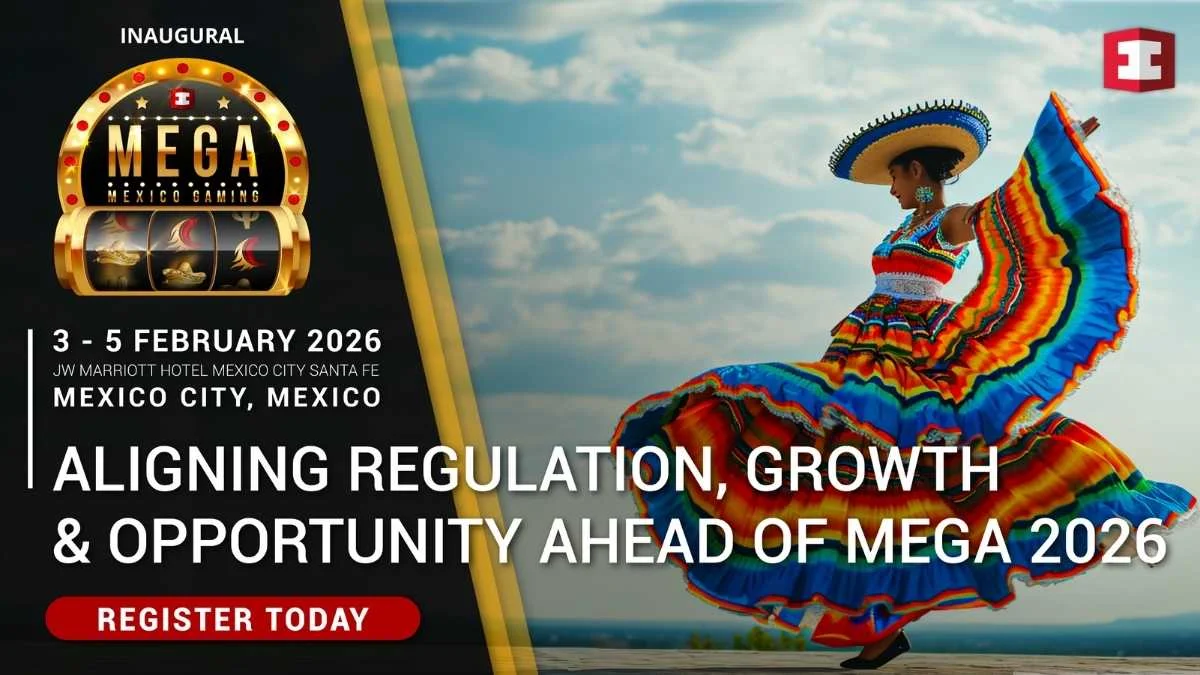
With the inaugural MEGA (Mexico Gaming) 2026 just three weeks away, industry leaders and experts are preparing for focused conversations on the future of Latin America’s gaming market. Join us from 3 – 5 February 2026 at the JW Marriott Hotel Mexico City Santa Fe in Mexico, where you can gain context, understand market trends, and take away ‘MEGA’ strategies to drive your business forward.
As we lead up to the event, a few headline speakers are giving exclusive previews of the conversations they will be leading on stage. Among them is Alfredo Lazcano, Chair of Lazcano Sámano and one of LatAm’s most experienced gaming lawyers, whose work spans advising regulators, governments, and operators in both established and emerging markets.
Ahead of MEGA 2026: Legal Veteran Alfredo Lazcano on Building Sustainable Gaming Markets
Long-awaited regulatory modernisation, new digital betting frameworks, and the approaching 2026 FIFA World Cup are collectively shaping the next stage of Mexico’s gaming market. It is in this context that Alfredo Lazcano, who will deliver the opening keynote at MEGA 2026, shared his perspective on the elements that underpin a strong and future-ready regulatory framework in LatAm.
According to Alfredo, regulatory maturity is not defined by complexity, but by structure, independence, and adaptability:
“I have always said that, in my professional experience, there are 5 main factors that can indicate when a market is optimal from a regulatory point of view: (1) when the gaming regulator is truly empowered to enforce the law; (2) when the gaming legislation is able to remain in force despite the surrounding factors that directly influence the gaming industry (e.g., political variables, technological advances, etc.); (3) when the gaming regulator – and lawmakers and policymakers in general – show a proactive openness to learn from regulations and experiences of other jurisdictions; (4) when the regulatory environment allows and encourages the gaming regulator to have a certain degree of independence and stability in their position as an official; and (5) when the secondary (non-gaming legislation) tends to promote investments and the establishment of new businesses, which is solely achieved through fair taxes and foreign investment protection policies.”
Mexico’s regulatory framework has continued to develop, with Digital Betting Platforms (DBPs) formally introduced on 1 January 2026, as Alfredo noted. He views this as an important step toward creating clearer pathways for international operators:
“In a nutshell, the DBP is a highly simplified tax scheme designed for foreign companies seeking to operate independently and without a physical presence in Mexico; that is, a DBP does not require triangulation with a local third party or the establishment of a Mexican entity. While the new DBP regulations are robust, complementary ‘control mechanisms and rules’ are expected from the gaming regulator. I am convinced that if the Mexican government implements this new DBP scheme effectively, it could undoubtedly be a game-changer that could provide long-term sustainability to the market.”
Across LatAm, maintaining market integrity remains a shared focus. From his perspective, the approaches that tend to work best against unlicensed operators are more practical and grounded in real-world measures:
“In my opinion, in these times we are living in, the most effective tools for combating illegal gambling are: (1) first of all, offering an environment that is attractive to investment (unfortunately, the Mexican gambling tax called ‘IEPS’, increased in 2026 from 30% to 50%, which can be counterproductive by inhibiting legal operators and exponentially increasing illegality); (2) second, there must be enforcement of the law, focused above all on combating organised crime and preventing financial crimes (we all know that the US is, at this very moment, putting a lot of pressure on Mexico in this regard); and (3) last but not least, payment providers must be required to comply with the law and not provide services to criminals who operate without authorisation in Mexico.”
Responsible gaming and player protection have long been central to Alfredo’s work. From his experience, he believes real progress comes from learning from proven international practices and making the most of available technology:
“Since I began my professional career in the gaming industry in 2007, I have witnessed that responsible gaming (RG) and problem gaming (PG) – which are not the same thing – are not easy topics to understand, regulate, and implement, neither for companies nor for authorities. It seems to me that the most reasonable approach is to be aware that in these two areas, we cannot reinvent the wheel. We must observe what other successful jurisdictions in RG and PG are doing, as well as pay close attention to new technologies that already offer some very useful tools to mitigate the collateral effects that, statistically, ludic activities have on a certain part of the population.”
He also explained what a strong and sustainable gaming market in Mexico and LatAm would mean in practice:
“Let’s hope that Mexico, and the Latin American region in general, not only experiences growth but also maturation. What would I like to see in 10 years? It’s simple: stable jurisdictions, regulatory environments that are attractive to investment, increased tax revenue and well-paying jobs for local economies, and above all, a culture of compliance and zero tolerance for crime.”
Lastly, with regulatory progress underway and global attention turning toward Mexico ahead of the FIFA World Cup, Alfredo highlighted the importance of MEGA 2026 as a platform for alignment and collaboration.
“I don’t believe there is a better time – or place – for MEGA 2026 to take place. Business leaders, gaming professionals, and regulators should attend this event to share and, where appropriate, align perspectives; work collaboratively; and ensure that the 2026 FIFA World Cup is fruitful for our industry and ultimately for our beloved country.”
Also Read: ICE Barcelona Strengthens Academic Ties Through UNLV Collaboration
Join the Decision-Makers Guiding Mexico’s Gaming Market Forward
As Mexico continues to draw attention as a key gaming market in Latin America, conversations are increasingly being shaped by those closest to its development. At MEGA 2026, you’ll hear directly from Alfredo Lazcano and other leading legal experts, operators, and investors who are helping guide where the market is headed. With the event just around the corner, now is the time to secure your place among those setting the agenda for the region’s future.
Register now: https://www.eventus-international.com/mega
