

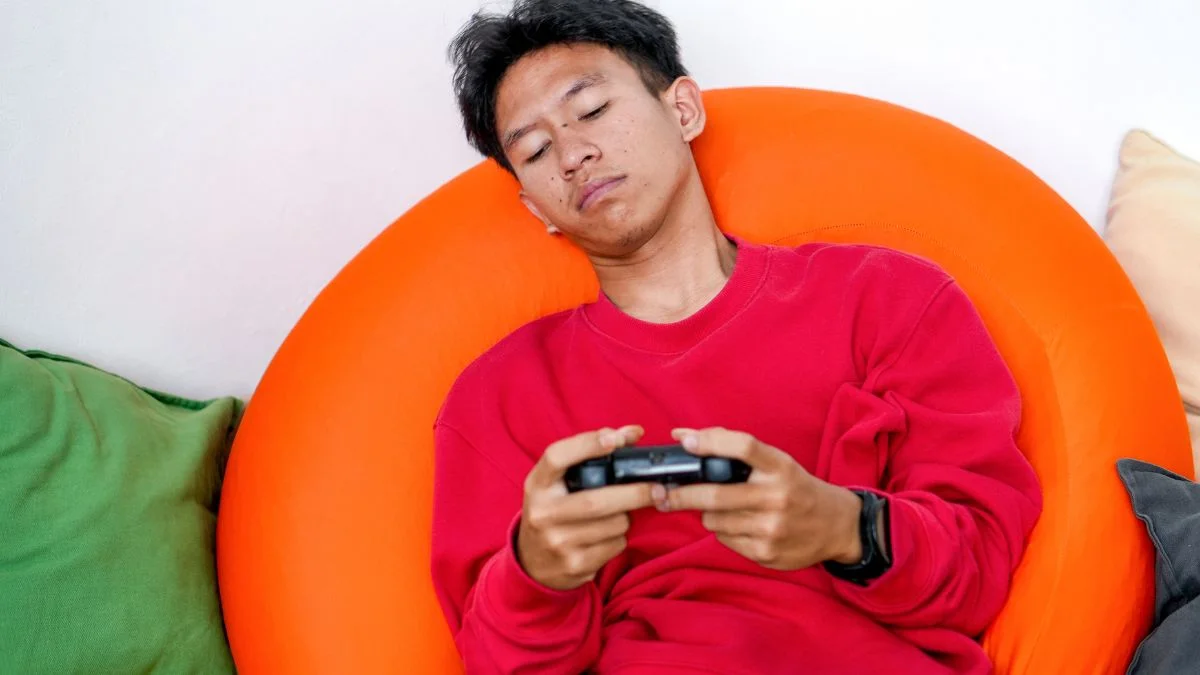
So your mom told you gaming is rotting your brain. Your teacher said it makes you violent. And somewhere on the internet, someone probably blamed video games for everything from bad grades to the downfall of society.
But here’s the thing, science tells a pretty different story.
Let’s break it all down, simply and honestly.
First, the bad stuff (yes, there is some)
Let’s not pretend gaming has zero downsides. That would be lying.
Too much screen time is real. It’s not good for your eyes, posture, or sleep to stare at a screen for eight hours straight. Screens that give off blue light mess with melatonin, the hormone that helps you sleep. So you play video games until 3 a.m. and then wonder why you feel like a zombie the next day? Yeah, that makes sense.
People can get addicted to video games. In 2018, the World Health Organisation officially added “gaming disorder” to its list of diseases. Researchers think that gaming stops being fun and starts taking over everything for about 3 to 4 percent of gamers. Jobs, relationships, school, and health. It turns into the only thing that matters.
A sedentary lifestyle is a real problem. Sitting still for hours every day can lead to weight gain, back pain, and even heart problems over time. This isn’t a problem with gaming; it’s a problem with sitting. But playing games makes it easy to sit for a long time.
Now, here’s the good stuff (and there’s a lot of it).
This is where things get interesting. Because most of the scary stories about gaming? When you look at the research, they don’t hold up.
Playing video games sharpens your mind. Several studies have demonstrated that action games enhance hand-eye coordination, reaction time, and spatial awareness. A 2014 study from the University of Rochester found that people who played action games made decisions 25 percent faster than non-gamers without losing accuracy. That’s not a small difference.
Problem solving skills get a real workout. Games like Minecraft, The Sims, Portal, and even Fortnite require planning, creativity, and quick decision making. Your brain is constantly working out solutions, managing resources, and thinking ahead. That is genuinely useful mental exercise.
Gaming can help with anxiety and depression. This one surprises people. Research from Oxford University found that playing games like Animal Crossing actually improved the wellbeing of players. Games give people a sense of control, achievement, and calm especially useful when real life feels overwhelming. Therapists have even started using certain games as part of treatment for anxiety.
Social skills and friendships. Multiplayer games are one of the biggest social spaces on the planet. Millions of people make real friends through gaming. They learn teamwork, communication, and how to handle winning and losing. For shy or introverted people especially, online gaming can be a genuinely safe place to connect with others.
Hand-eye coordination and reflexes. Surgeons who grew up gaming have been shown to perform better in certain procedures. A study published in the Archives of Surgery found that doctors who played video games made 37 percent fewer errors during laparoscopic surgery. So yeah gaming might literally save lives one day.
What about violence?
This is the big one. Do playing violent video games make people act violently?
No, not really.
Scientists have been looking into this question for more than 30 years, and the evidence just doesn’t show that playing video games leads to violence in the real world. Japan and South Korea are two of the countries with the most gamers and the least violent crime. The maths just doesn’t add up.
A big study from Oxford in 2019, one of the most thorough ever, found no link between violent games and teens acting aggressively. In 2020, the American Psychological Association changed its mind and said that research does not support the idea that video games cause violence.
Do some people get mad or frustrated while playing video games? Of course. But that’s not the same as making people hurt each other.
So what does “healthy gaming” actually look like?
The science basically agrees on this: gaming itself is not the enemy. The problem is how, how much, and what you sacrifice for it.
Here’s what balance looks like in simple terms. Take regular breaks the 20-20-20 rule works well, every 20 minutes look at something 20 feet away for 20 seconds. Keep a consistent sleep schedule and don’t let gaming eat into your sleep time. Move your body every day, even if it’s just a 20-minute walk. Keep other areas of your life healthy friendships, food, school or work. And pay attention to how gaming makes you feel. If it’s mostly fun and relaxing, great. If it’s making you anxious, angry, or you feel unable to stop, that’s worth paying attention to.
Also Read: Is PlayStation Portal Worth It In 2026? Features And Price
