

For companies working in the iGaming B2B space, trade media, industry expos and local partner networking events are still important ways to get noticed. But over the past few years, another channel has become just as important and it’s one you shouldn’t ignore: LinkedIn.
Most of the industry spends a big part of their working day on LinkedIn. It’s where founders, C-level executives, casino managers, providers, aggregators, media buyers and a lot of journalists are all active.
LinkedIn used to be seen mainly as a job-hunting platform. Today, it has become one of the main hubs for professional networking in iGaming. It’s often where future partnerships begin and it’s also where companies and individuals can build stronger visibility across the industry.
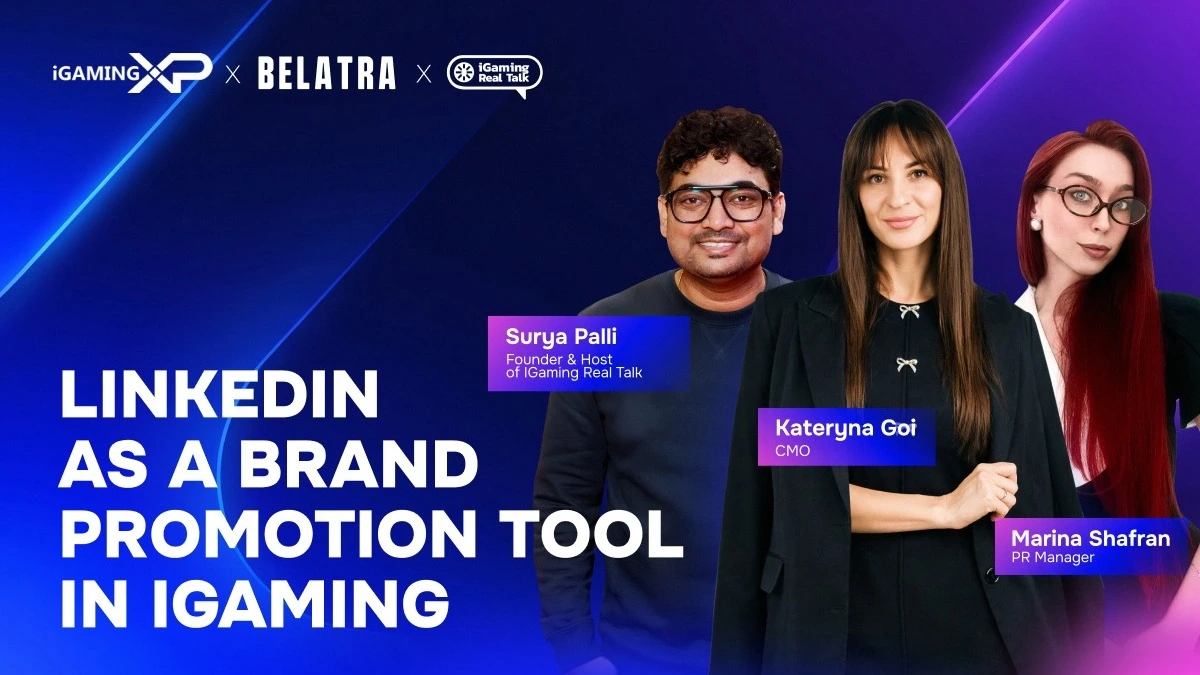
To explore how LinkedIn shapes brand reputation and visibility across the iGaming industry, and how employees’ personal profiles can contribute to brand promotion, we spoke with Kateryna Goi, CMO and Marina Shafran, PR Manager at Belatra Games, as well as Surya Palli, Founder & Host of iGaming Real Talk. We asked them to share their perspectives on the platform’s growing role in industry communications and the impact of personal branding on business visibility.
What the iGaming Industry Looks Like on LinkedIn
In the iGaming industry, LinkedIn has long moved beyond being a platform for stiff, formal corporate posts. Today, it serves as the market’s primary informal meeting ground. It has fostered a distinct, relaxed communication style that comes alive especially in the lead-up to and during major industry exhibitions, such as SiGMA, ICE and SBC.
This activity is gradually reshaping how industry media engage with their audience. Many outlets adapt their content to fit the platform’s nuances and launch dedicated LinkedIn-first formats. Video interviews with industry figures, expert rapid-fire Q&As and short commentary pieces designed specifically for LinkedIn are becoming increasingly common.
“Expert opinions, release and partnership announcements, memes, and unapologetically sarcastic takes on industry happenings all coexist quite organically in the same feed,” commented Marina Shafran. “You may have already noticed a phenomenon of its own: ‘Meet Me’ banners ahead of expos, where people get to show off their creativity and, at times, their wit. As for media, short-form video has grown noticeably and its volume will only keep rising from outlets, providers, agencies, and industry professionals alike. And as short-form video expands on LinkedIn, podcasts will gain even more traction on YouTube, which I’d also recommend tapping into. According to a Worldcom Group study, this type of content will be especially popular across industries in 2027 and in iGaming, that trend is already visible toward the end of 2026.”
A key trait of the iGaming community on LinkedIn is that you don’t need to stick to a strictly formal tone to maintain professional authority. On the contrary, a sense of humor, a personal stance, and the ability to jump on trending topics help you stand out amid dry, buttoned-up posts.
At the same time, corporate pages and personal profiles serve different purposes. A company page sets the brand’s official news agenda, highlighting newly released and upcoming games, partnerships, and milestones. Personal accounts of executives and employees bring what corporate communications often lack: hands-on experience, charisma, and the ability to build a direct dialogue with the industry. Such content feels more authentic and inspires greater trust, as audiences are more inclined to listen to real people than to faceless brand messaging.
“On LinkedIn, it’s important to be part of the conversation not just writing posts, but leaving comments and replying to colleagues’ updates. In other words, staying consistently visible to the professional community,” added Belatra Games’ PR Manager. “A personal brand isn’t built on a single viral post; it’s always a cumulative effect. You can write about your work, discuss trends, or share photos from events. At the end of the day, just like on any other social network, people follow not only expertise, but a charismatic personality.”
According to Surya Palli, Founder & Host of iGaming Real Talk, one of the industry’s most popular podcasts featuring iGaming leaders, LinkedIn is the media project’s primary communication channel.
“I’ve been on LinkedIn for years, but I really started building my presence there in 2017. This is where the iGaming B2B audience is. Profiles are verified, and everyone we need is already here and active. If you’re selling into iGaming B2B, this is the platform to focus on. It’s still number one, no question.
We publish two to three posts every day, including weekends, and have been doing so for more than a year. We alternate between my personal account and the brand account, sharing clips from our podcasts. This is where our audience discovers us and gets to know the project.
LinkedIn has been a huge part of building our brand. Without this platform, we wouldn’t be where we are today,” Surya explained.
He also believes that LinkedIn remains underrated by many industry players, particularly when it comes to B2B communications.
“There’s so much AI slop on LinkedIn now. Everyone is moving towards AI, so doing marketing the right way matters more than ever. I think the way to stand out is through content that feels more human, more real, and delivers genuine quality.”
Why a Corporate Profile Alone Isn’t Enough
Almost every professional has a personal LinkedIn profile. Their network includes past and current colleagues, people from other brands, partners, journalists and contacts from different markets. These connections don’t always overlap with a company page’s followers.
When someone shares company news with their own thoughts or writes an original post tagging the brand, the company reaches new audiences. Reactions and comments then help the post travel well beyond their immediate circle.
One crucial detail stands out here: users are far more likely to comment on a post from an individual than from a corporate account.
“Creative posts from a company page don’t always get the same reach as personal profiles because LinkedIn doesn’t push them as much,” explained Marina Shafran. “Reach can even be lower on giveaways, even though you’d expect them to drive action. Overall, the platform is very sensitive to giveaways our ad campaign for one such post was blocked three times. What performs well on corporate profiles are posts featuring people: photos of employees and videos, especially from trade shows. Still, a personal post generally has a much higher chance of going viral. People are noticeably more active in commenting on posts from someone they know.”
Building on this, a CMO can weigh in on marketing trends, a Head of Development can talk about product solutions, and a localization specialist can share market insights. Employees can post snapshots from expos and talk about projects they’ve delivered. This allows the company to maintain a presence across multiple industry conversations simultaneously.
“A LinkedIn post can easily hit 10,000 views. It’s not a guaranteed outcome, of course, but it illustrates the platform’s potential. Posting here is a great and, importantly, completely free way to amplify news hooks, gather feedback on projects, and stay connected with the community,” the PR Manager added.
There is also another, very practical benefit.
“For example, a journalist might spot an executive’s insightful post on LinkedIn and invite them to expand on the topic in a media interview,” noted Marina Shafran. “Brands gathering data for large-scale industry reports might also ask for your market perspective, or invite you to speak at a conference or join a podcast. In Belatra Games’ experience, these invitations frequently go to our team members who are active on LinkedIn especially our CMO, Kateryna Goi. Let’s put it this way: over the past month alone, we’ve received three interview invitations from the media directly through LinkedIn. When company representatives regularly show up in discussions and share their expertise, they gain visibility, and the brand grows right alongside them.”
The Employee Advocacy Phenomenon
One effective way to make the most of personal profiles is through Employee Advocacy encouraging staff to share company updates from their own accounts. But this should never mean forced, top-down mass reposts, as that usually backfires and creates negativity.
Beyond reach, employee activity on LinkedIn gives people a fresh look at the company. Professional milestones, team initiatives and even out-of-office moments help create a fuller, more well-rounded picture of the employer.
“Some brands and I’m not even talking strictly about our industry here tightly control what employees post on LinkedIn,” commented Marina Shafran. “That’s understandable: public statements from the team can shape brand perception. However, in my view, it’s important not to confuse guidance with restrictions. If employees talk about professional achievements or projects they’ve delivered at the company, that kind of activity should be encouraged, not stifled. Ultimately, it boosts your employer brand. Job seekers look at how proud people are of what they do, and they might want to join the company specifically to share that same passion for what they build.”
A far better approach is inviting the team to join initiatives that let them express themselves, tell a personal story, or support a project they genuinely care about.
Belatra Games put this approach into practice when launching an international survey on the hobbies of iGaming professionals in partnership with G&M News.
“We invited our team to share their hobbies on their personal LinkedIn profiles along with photos of them doing what they love dancing, snowboarding, skiing, diving, reading, or visiting museums,” said Marina Shafran. “From what we’ve observed on both personal and corporate profiles, posts with photos or videos featuring real people consistently outperform standard business news in reach. Thanks to this approach, the project gained substantial extra traction.”
The PR Manager also emphasized that LinkedIn should by no means replace traditional PR or trade media.
“It’s a complementary communications tool that makes your overall promotional strategy more effective,” Marina added. “Trade media reinforce the brand’s authority as an industry expert and today, coverage in reputable industry outlets also influences how a brand is represented in AI-generated search answers. The corporate page remains the official source of company news, while personal profiles add the human touch and expand reach.”
Real expertise over generic posts: advice from Belatra Games CMO Kateryna Goi
“I’d start from the opposite end I have a pretty clear sense of what kinds of posts don’t work,” noted Kateryna Goi, CMO at Belatra Games. “Those are texts written entirely by AI with zero input from the author. When someone simply tells ChatGPT, ‘Write me a LinkedIn post on X,’ and hits publish without adding their own perspective or real-life stories, the post usually lacks the most important ingredient: individuality.”
Kateryna is by no means against using AI tools. They are great for proofreading, fixing grammar, structuring thoughts, or sharpening phrasing. Still, AI should help the author express their ideas not do the thinking for them.
“Posts grounded in real professional experience get a much stronger response: specific situations sometimes funny, sometimes crisis-driven personal takeaways, observations, and even mistakes,” added the CMO. “This is especially true when they touch on trade shows, human interactions, or personal projects. That’s the kind of content audiences actually care about: instead of recycling generic talking points you can find anywhere, it offers the perspective of someone genuinely working in the trenches.”
Kateryna’s golden rule: don’t post just for the sake of maintaining a schedule, even if consistency favors the algorithms. Empty posts published purely to fill a slot are easy to spot, and putting out too many will hurt audience engagement. One thoughtful post a week beats daily spam every time.
“For me, the benchmark of a strong post isn’t just reach,” Kateryna shared. “Analytics matter, of course, but there’s another metric I value just as much: comments from fellow professionals, and seeing my posts quoted or shared by iGaming industry news channels on Telegram. To me, that signals the topic truly resonated and broke out beyond my immediate network.”
This often raises a common question: what should you write about if you’re just starting to build your personal brand?
“My answer is simple: write about what you already know,” said Belatra Games’ CMO. “Starting your journey on LinkedIn doesn’t mean starting your career from scratch. You already have experience, knowledge, workplace stories, observations, and your own conclusions. They might feel routine to you, but to someone in your network, that exact insight could prove valuable or offer a fresh perspective on a familiar challenge.”
You don’t need to position yourself as an expert on everything. Being genuine about what you share matters far more. Ultimately, a personal brand isn’t built on post volume it is shaped by how recognizable your professional voice, experience, and personal charisma become.
Also Read: Hit of Pig Slot: ONLYPLAY Unveils 97% RTP Forge Game
