

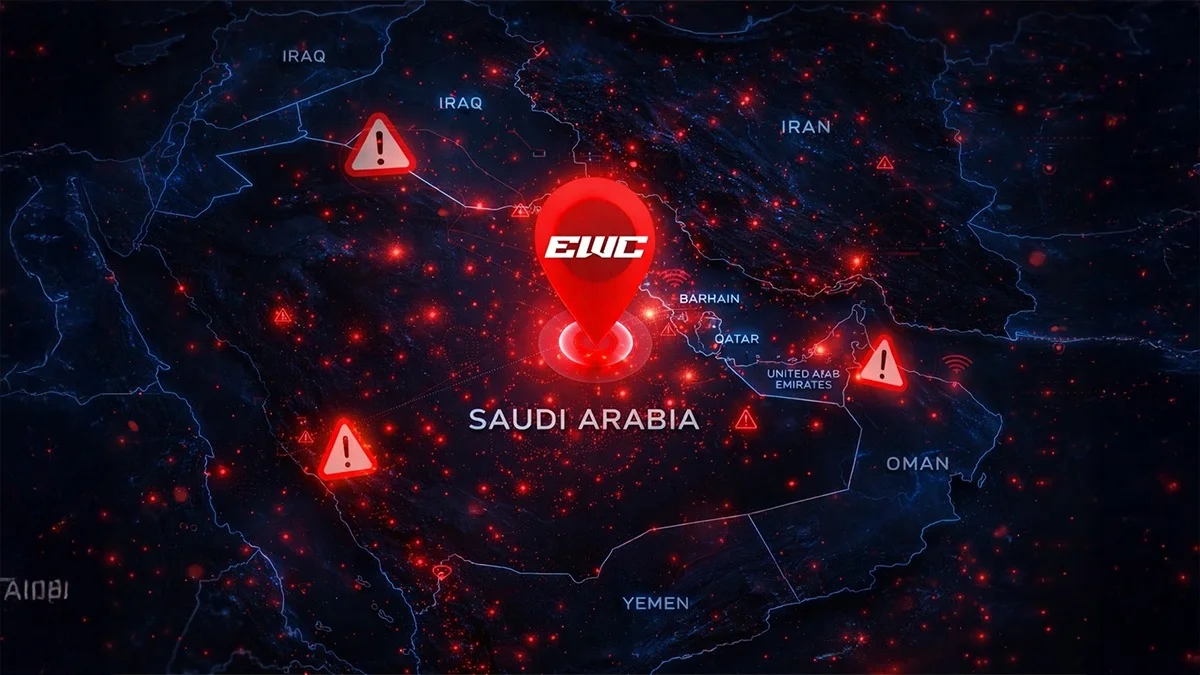
The Esports World Cup 2026 was expected to become the biggest esports event ever organized. The tournament planned a massive prize pool of 75 million dollars, more than 2,000 professional players, and competitions across 24 different game titles. Players from over 100 countries were preparing to travel to Riyadh, Saudi Arabia, where the event is scheduled to run from July 6 to August 23.
However, recent military conflict in the Middle East has created serious concerns about whether the event will happen as planned.
What was supposed to be a historic esports celebration has now become uncertain because of rising regional tensions.
Why the Situation Became Serious
The crisis began on February 28, 2026, when the United States and Israel carried out military strikes inside Iran. According to international reports, the attacks targeted important military facilities and leadership figures. Iran quickly responded with a large counterattack using missiles and drones across several Gulf countries.
More than 130 ballistic missiles and over 200 drones were launched toward different locations connected to United States military operations in the region. Countries including the United Arab Emirates, Qatar, Bahrain, Kuwait, and Saudi Arabia were affected.
One of the missiles was aimed toward Riyadh, the capital of Saudi Arabia and the planned host city of the Esports World Cup 2026. Saudi officials confirmed that their air defense systems intercepted the projectiles before they caused damage.
Even though the attacks were stopped, the message was clear that the region is now directly connected to the conflict.
What Happened Across the Gulf Region
Several countries in the Gulf region faced serious disruptions after the attacks.
The United Arab Emirates experienced some of the biggest impacts. Reports confirmed that a few people were killed and parts of Dubai saw damage caused by drone debris. Airports in both Dubai and Abu Dhabi temporarily stopped operations. Authorities also moved schools and universities to online learning and asked some companies to allow employees to work from home.
Saudi Arabia also confirmed that missile strikes were aimed at Riyadh and areas in the Eastern Province. While officials said the threats were intercepted successfully, security alerts increased across the country.
Air travel across the region was affected as well. Several airlines cancelled flights, and many passengers were stranded as countries temporarily closed their airspace.
These developments created major travel problems that could affect international events planned in the region.
Why This Matters for the Esports World Cup
The Esports World Cup is not just another gaming tournament. It is a major project supported by Saudi Arabia’s Vision 2030 strategy. The goal is to make the country a global center for gaming, entertainment, and esports.
The event is backed by the Saudi Public Investment Fund through the Esports World Cup Foundation. Large investments have been made to build esports infrastructure, attract international teams, and host global competitions.
The previous edition already included more than 25 game titles and thousands of participants. The 2026 version was expected to be even bigger with new competitions, including a country based event called the Esports Nations Cup.
Because of the recent conflict, several new concerns have appeared.
Safety of Players and Teams
More than 2,000 professional players, staff members, media representatives, and fans were expected to travel to Riyadh. With missile attacks recently targeting the city, some organizations may now question the safety of sending their teams to the region.
Even if security systems remain strong, international participants will carefully evaluate the situation before confirming travel plans.
Insurance costs for large events may also increase when security risks grow.
Travel Challenges for International Visitors
Many players and teams travel to Saudi Arabia through connecting flights in cities like Dubai or Doha. Both of these locations were affected during the recent missile and drone attacks.
If airspace restrictions continue or new security measures are introduced, travel routes to Riyadh could become more complicated. Flight delays, cancellations, and airport disruptions may make it difficult for players to reach the event.
For a global tournament that depends on smooth international travel, this creates a serious logistical challenge.
Questions About Participation From Some Countries
Esports communities exist in many countries affected by the conflict, including Iran. While Iranian teams are not always the main competitors in the Esports World Cup, the broader issue remains.
Players from countries involved in political tensions may face visa restrictions or travel complications. Similar discussions have already appeared in other global sports events where international conflicts affect participation.
Concerns From Sponsors and Media Partners
Large esports events depend heavily on sponsors, media rights, and global broadcasts. Companies that support international tournaments often evaluate risks carefully before committing to long term partnerships.
A security crisis near the host location could create hesitation among some sponsors, especially international brands that want to avoid political controversy.
Broadcast partners also rely on stable environments for production teams, equipment transport, and event coverage.
Could the Tournament Be Delayed or Moved
At this moment, the biggest question is whether the Esports World Cup will still happen in Riyadh this summer.
Saudi Arabia has strong financial resources and political motivation to host the event successfully. The government has also emphasized that its defense systems protected the city and that security remains strong.
Since the tournament is scheduled for July, there are still several months for the situation to calm down.
However, if the conflict continues or becomes more serious, organizers may have to consider alternative options.
Moving the tournament to another country would be extremely difficult because the infrastructure for the event has already been built in Riyadh. Large esports events require specialized venues, broadcast technology, and coordination with many game publishers.
Because of this, postponing the event would be more realistic than relocating it to another country.
Also Read: SBC Summit Canada 2026 Prepares The Industry For What’s Next
