

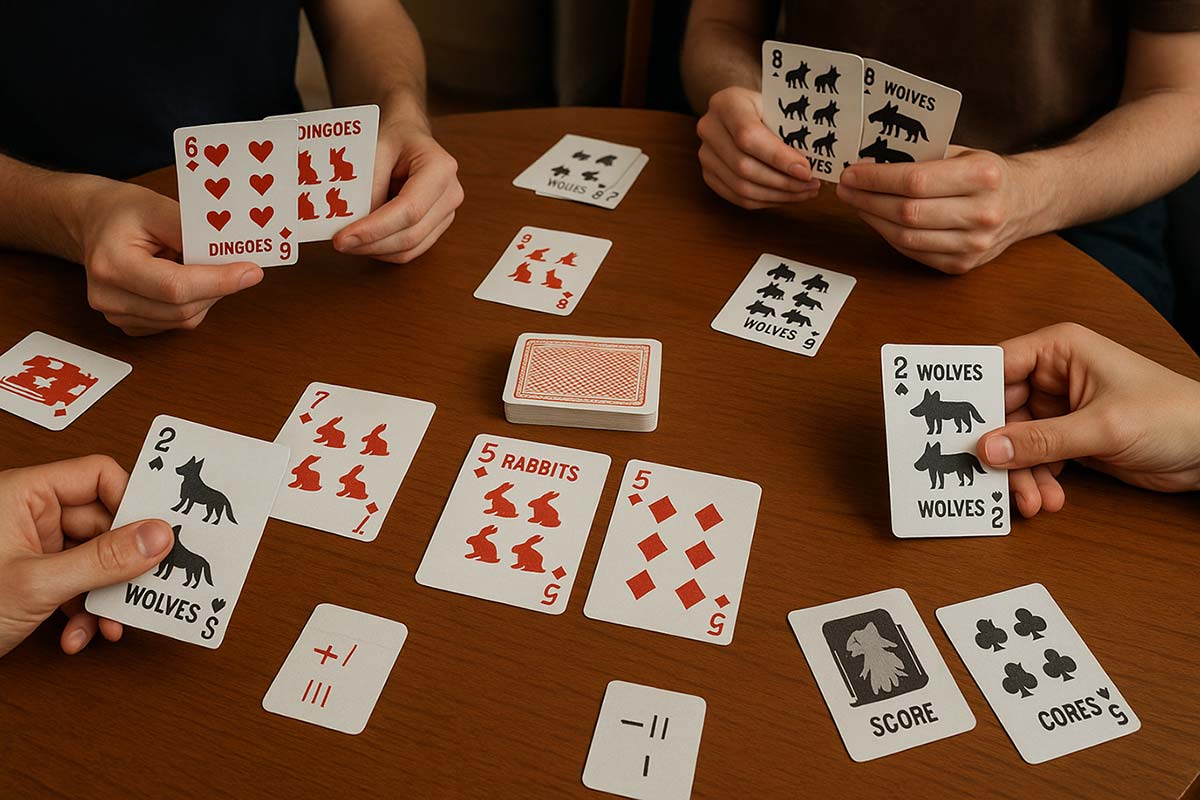
How to Play Dingo: The Fun, Animal-Themed Card Game
If you’re a fan of unique and quirky card games, Dingo might just be the next game you’ll love. Popular in Cleveland, Ohio, this four-player card game combines fun mechanics with animal-themed card names that make it stand out. Don’t let the strange terminology confuse you – once you understand the basics, you’ll be hooked!
What You Need to Play Dingo
To dive into a game of Dingo, you’ll need the following:
4 players: The game is designed for a group of four, making it perfect for a night with friends or family.
A standard 52-card deck: You’ll need a regular deck of cards, but without jokers. Make sure your deck is shuffled and ready.
A flat surface: You’ll need a table or a flat surface to lay out your cards and play.
A bit of patience and brainpower: It’s not just about luck; strategy plays a big role in Dingo.
The Unique Card Names and Points System
What sets Dingo apart from regular card games is the fun animal-themed terminology used to describe the suits and points. Here’s how it works:
| Card Type | What Do You Say? | Score |
|---|---|---|
| Diamonds | Rabbits | +10 for Ace Rabbit, +1/-1 for others |
| Hearts | Dingoes | +1/-1, sometimes a penalty |
| Spades/Clubs | Wolves | Always positive points |
Understanding the Point System:
Low cards (2-7, 9): +1/-1 points
High cards (10, J, Q, K): +2/-2 points
Aces (except Ace of Diamonds): +3/-3 points
Ace Rabbit (Ace of Diamonds): +10/-3 points
How to Start a Game of Dingo
Let’s get started with the basics of how the game is set up:
Choose a Random Dealer: Pick someone to be the dealer, and the game proceeds clockwise from there.
Prepare the Cards: Separate all the Diamonds (2 to King) and place them in the center of the table face-up, with two cards on top to form the Rabbit pile.
Deal the Cards: Shuffle the remaining 40 cards (13 Hearts, 13 Spades, 13 Clubs, and the Ace of Diamonds) and deal 10 cards to each player.
The Card Exchange System
Before the main game begins, players need to discard and exchange cards in the following sequence:
First Discard: Everyone discards one card face-up (Aces are not allowed).
First Exchange – Left: Pass one card to the left.
Second Discard: Discard one more card.
Second Exchange – Across: Pass one card across (to the opposite player).
Third Discard: Discard another card.
Third Exchange – Right: Pass one card to the right.
Final Discard: Discard one final card, leaving each player with 6 cards.
The Hunt Phase: Time for the Rabbit Hunt!
Once all the discarding and exchanging are done, the Rabbit Hunt begins. Here’s how it works:
Picking the Top Rabbit: The first card from the Rabbit pile is revealed. If there are two Rabbits, the player who has two Dingoes (Hearts) in hand must play them.
Wolves in the Game: The other players can choose to play Wolves (Spades/Clubs) of the same number as the Rabbit.
Possible Scenarios: There are four possible outcomes in this phase:
No Dingo: If no Dingo is played, the Rabbit is discarded and no one scores.
Dingo, but no Wolves: The Dingo player gets a penalty.
Dingo + 1 Wolf: The Rabbit + Dingo equals a Wolf, and it goes into the Dingo player’s scoring pile.
Dingo + 2 Wolves: The first Wolf goes into the Dingo player’s pile, and the second Wolf captures the Rabbit.
Important Rules to Remember:
No Wolves for the Dingo Player: The Dingo player cannot play the Wolves themselves.
Two Wolves by the Same Player: If a player plays two Wolves, the first one goes into the Dingo player’s score.
Black Cards Always Add Positive Points: Wolves (Spades/Clubs) are always beneficial!
Ace Hunt – The Final Phase
Once all the Rabbits (2 to King) have been hunted, the Ace Hunt begins. Here’s how it differs:
Ace Dingo Must Play: The player holding the Ace of Dingo (Ace of Hearts) must play it.
Wolves’ Turn: The remaining players can play Wolves. If none do, the Ace Dingo goes into the penalty pile.
Ace Rabbit Rules: The Ace Rabbit can only be played once both Ace Wolves have been played.
Scoring the Game:
After all the cards have been played, it’s time to tally the scores:
Each player counts the points in their scoring pile and subtracts the points in their penalty pile.
If any red cards (Hearts or Ace Rabbit) remain in a player’s hand, that player is disqualified from winning.
The player with the highest score wins! If there’s a tie, the player with the highest value Rabbit wins.
Conclusion
Dingo is a fun, dynamic, and engaging card game that offers a fresh take on traditional card games. Its unique rules and animal-themed suits make it a great choice for anyone looking for a new game to play with friends or family. Whether you’re a seasoned card player or a beginner, Dingo will provide plenty of excitement and strategy to keep you entertained.
Also Read: Legal Gambling Safety: Why It Matters Most
